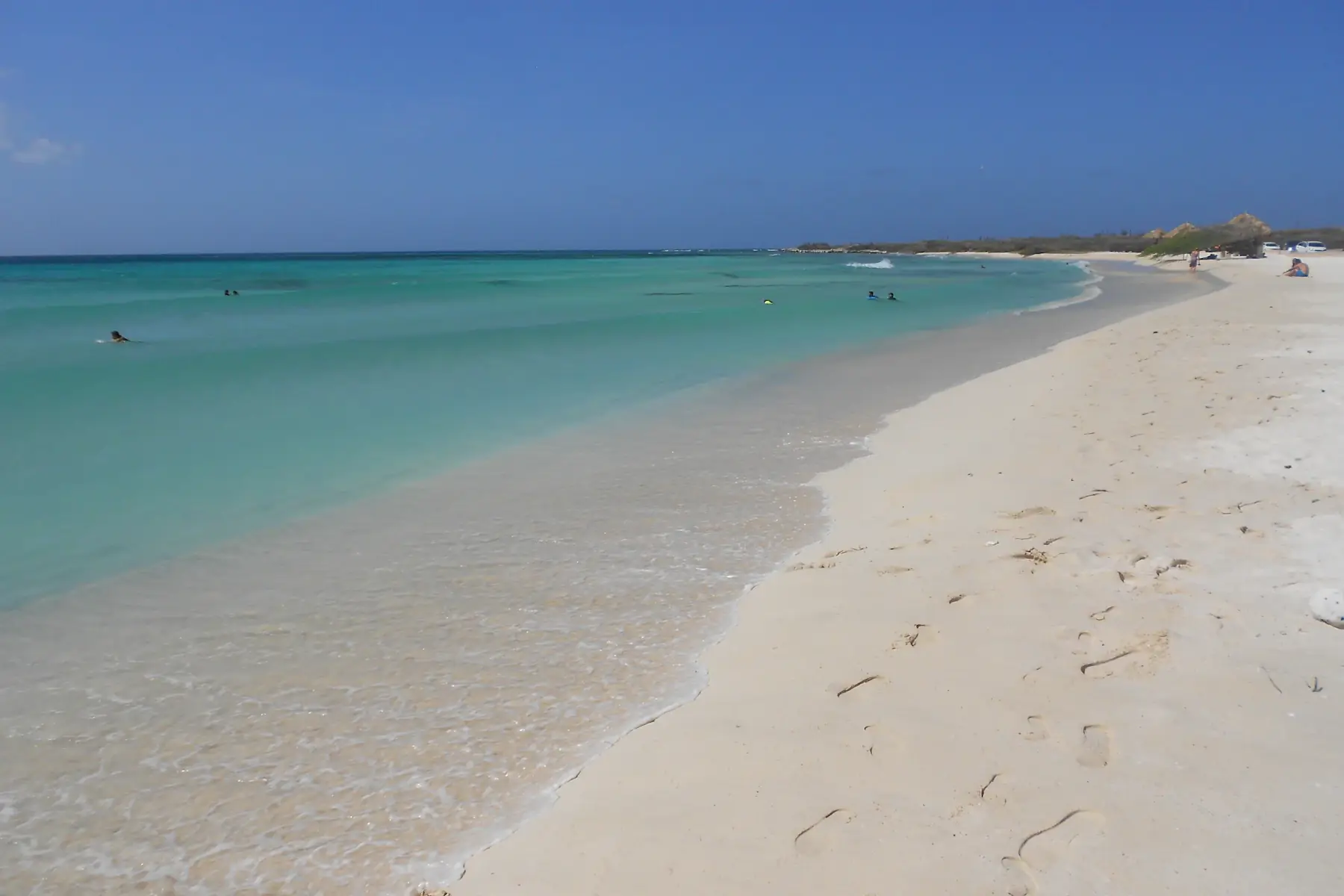
The short answer
Start with Aruba if you want to build your stay around the Palm Beach or Eagle Beach hotel areas. Start with Curaçao if you want to combine Willemstad with different coves. Both can work for a relaxed or active trip; your accommodation and transport choices often make the bigger difference.
For a beach-led week
On Aruba, compare accommodation around Eagle Beach and Palm Beach, then check which restaurants and activities are nearby. On Curaçao, decide whether you want a city base, an accommodation by one beach, or days visiting several coves. Do not assume that every hotel on either island has direct beach access.
For exploring between beach days
Aruba offers Oranjestad and the landscapes of Arikok; Curaçao offers Willemstad and a varied coastline of bays. Choose the outings you actually want, then map them from a possible hotel. A rental car can be useful for some itineraries, while a few organised trips or transfers may suit a quieter week.
Which is cheaper?
We do not assign a blanket “cheaper island” label. Price both trips for the same dates, travellers, luggage and accommodation standard. Add transport, meals and the activities you expect to book. Look at the final total rather than a low room rate or a promotional flight price on its own.
Related guide: Where to stay in Curaçao: choose the area before the hotel
A simple way to decide
Write down three priorities and one thing you want to avoid. Shortlist two stays on each island and compare how a typical day would work from each. If travelling with children, check room occupancy and age policies before comparing prices: some appealing hotels are adults-only. Book the itinerary that fits, rather than trying to declare a universal winner.
Picture your base before comparing islands
Aruba's Palm Beach and Eagle Beach give you two obvious starting areas for a beach-focused search. On Curaçao, compare a Willemstad-area base with a western base if you want to spend time among the smaller bays. Those choices are more useful than trying to award a whole island a universal score for relaxation, culture or family travel.
Make a shortlist of accommodation on both islands that matches the same needs. Include the walk or drive to the beach, meal arrangements, room size and transport. Then compare a normal holiday day from each property. An excellent hotel in the wrong location can be a poorer fit than a simpler one that supports the trip you want.
Compare three priorities honestly
Choose three priorities for the group: easy beach access, several independent outings, restaurant evenings, underwater activities or a comfortable family routine. Rank them before checking prices. If everyone wants different things, look for the base that meets the shared priorities and allows separate activities without complicated transport.
For example, a traveller who wants to return to the same beach every day may make a different choice from someone who wants a new cove most mornings. Neither preference is more adventurous or more authentic. The comparison should help you decide where to spend your own limited holiday time, not persuade you to collect experiences you do not enjoy.
When two islands make sense
A longer holiday can accommodate both, but treat the move as a travel day. Check the actual flight, baggage rules, airport transfers and check-in times before dividing the nights. A short scheduled flight still includes packing, airport time and settling into another accommodation.
For a one-week first visit, our default suggestion is one island and one base. For a longer trip, add the second island only if it provides something you specifically want and leaves enough time to enjoy it. Put the final night where your international departure arrangements work best, especially if separate tickets are involved.
Sources & method
Sources reviewed on 11 October 2026. The references below support the factual details; trip suggestions are editorial choices. This is a desk-researched guide, not an on-site inspection. Conditions and provider terms can change.
Our method & corrections